Beyond Connectivity: Why smarter networks are reshaping live sports production
How intelligent, orchestrated networks are reshaping live sports production as broadcasters manage complexity, cloud and new fan experiences.
01 September 2026 · 4 minute read
Telstra Broadcast Services outlines how intelligent, adaptive and orchestrated networks could help media organisations manage growing complexity and focus on the outcomes that matter.
A single moment in sport can now become hundreds of content experiences: a world feed, personalised highlights, a vertical social clip, a multilingual stream and mobile-first formats tailored to different audiences.
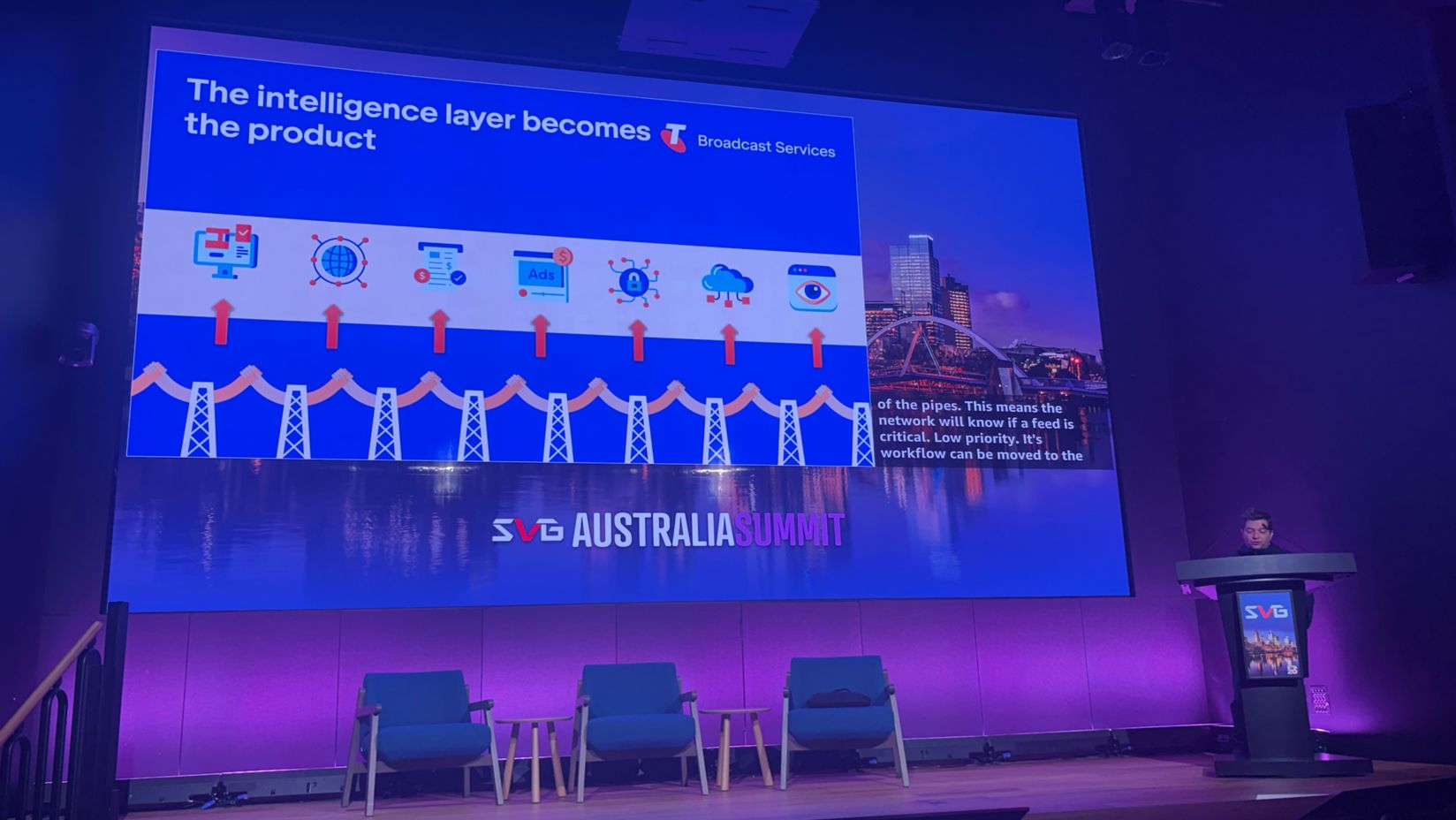
This changing environment was the focus of “Beyond Connectivity,” a presentation delivered by Carl Petch, Chief Technology Officer at Telstra Broadcast Services (TBS), at the 2026 SVG Australia Summit held in Melbourne in August. The event brought together Australia’s sports production community to examine the changing sports rights landscape, production innovation, women’s sport, the television fan experience and the growing role of data in broadcasting.
Petch’s argument is that the industry’s challenge is no longer simply moving media from one point to another. Broadcasters, rights holders and content creators now operate across venues, production hubs, edge environments, cloud platforms and remote teams at the same time, making orchestration and automation as important as carriage.
From connections to outcomes
For decades, broadcast networks were designed around fixed locations, predictable feeds and resilience through duplicated paths. Today, workflows are increasingly dynamic and distributed, while audiences expect content in more formats, across more platforms and with greater personalisation.
Internet, fibre, 5G and satellite options are giving media organisations more ways to contribute and distribute content, while remote production and AI-supported workflows are changing where production happens and how quickly content can be adapted for different audiences.
The opportunity is to build networks that understand content and intent, adapt to changing conditions, support automation and APIs, and provide the security, governance and visibility media teams need. In that model, the network becomes more than infrastructure; it becomes a platform for production outcomes.
“Customers don’t wake up wanting more bandwidth. They want the feed to arrive, the stream to work and the audience to stay engaged,” said Petch. “The next evolution of the media network is about making the right decisions across connectivity, platforms and services, so customers can spend less time managing complexity and more time creating great content.”
Orchestration already at work
TBS is already applying this thinking through Telstra Dynamic Connect, its fully managed, software-defined connectivity platform currently available in Australia.
Telstra Dynamic Connect combines available fibre and 5G connectivity as one managed service, supported by broadcast-grade service assurance and 24/7 monitoring from the Telstra Broadcast Services Broadcast Operations Centre. Edge compute at the venue can also support the deployment of encoding, delivery and other value-added services on demand.
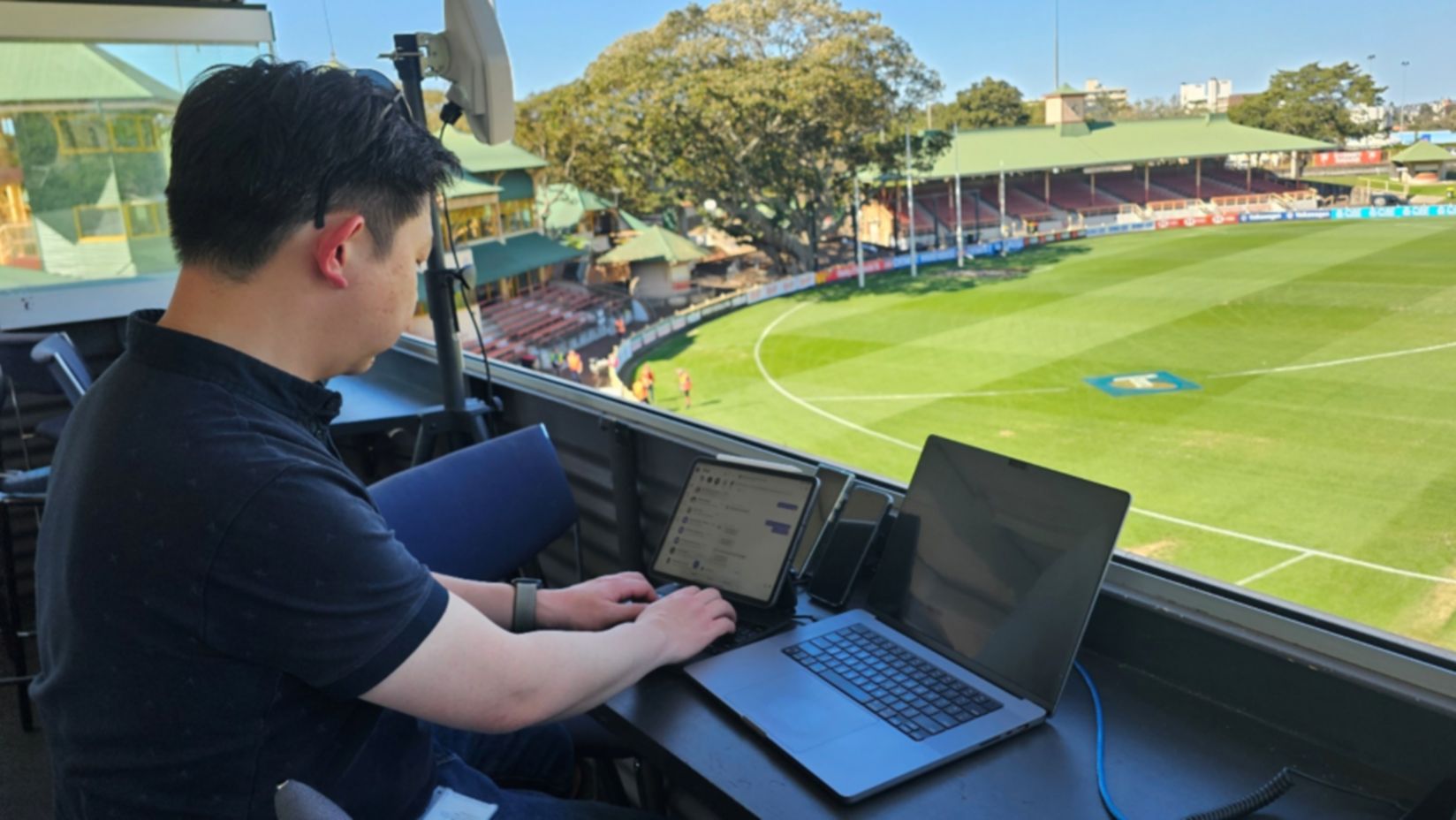
Its first installation in North Sydney supported a live national sports broadcast in June 2026, showing how connectivity, processing and service delivery can be brought together as a managed outcome rather than separate technical components for production teams to coordinate. For media organisations, that shift means fewer separate components to manage across connectivity, processing, monitoring and distribution, and more focus on delivering live content reliably across every platform.
Building the next generation of media networks together
No single organisation will build the future media network alone.
The next generation of media delivery will depend on collaboration between broadcasters, rights holders, venues, cloud providers, technology companies, connectivity partners and service providers. The opportunity is to create a smarter ecosystem that connects these organisations more seamlessly while reducing the operational complexity behind each production.
At IBC2026, Petch and the TBS team will continue that conversation with customers and partners, discussing how intelligent connectivity, edge computing, software-defined services and managed operations can support more flexible, scalable media workflows. IBC2026 takes place from 11 to 14 September 2026 at the RAI Amsterdam.
Connect with us
Journalists attending IBC2026 who are interested in the future of live sports production, intelligent media networks or software-defined broadcast workflows can connect with the Telstra Broadcast Services team to arrange time with Carl Petch in Amsterdam.
Related articles
-
-
At IBC 2026, Telstra explores how hybrid delivery, remote production and managed connectivity are transforming the future of sports broadcasting.
-
Partnership enables terrestrial fibre and subsea network integration to enhance national connectivity and unlock new opportunities for the AI era